

Author Note: I have an active CASY 0.00%↑ put option position expiring on Oct 16 2026 at a strike price of $600. If assigned, I acquire 100 shares of CASY 0.00%↑ at a cost basis of $588.5 per share. This allows me to capture premium while potentially getting the stock and lowering my cost basis on those shares.
The intersection of the convenience retail and quick service restaurant (QSR) business models is an interesting one. CASY 0.00%↑ actively positions itself at this crossroads. Their valuation was priced for perfection before the earnings. With the recent price drop, it is worth taking a look at CASY 0.00%↑ to see if investors can get some value.
Looking at the information presented on their investor relations page, you can see that CASY 0.00%↑ has most of their operations in the Midwest. They operate out of 19 states as seen below and are actually the 3rd largest convenience store chain in the nation.
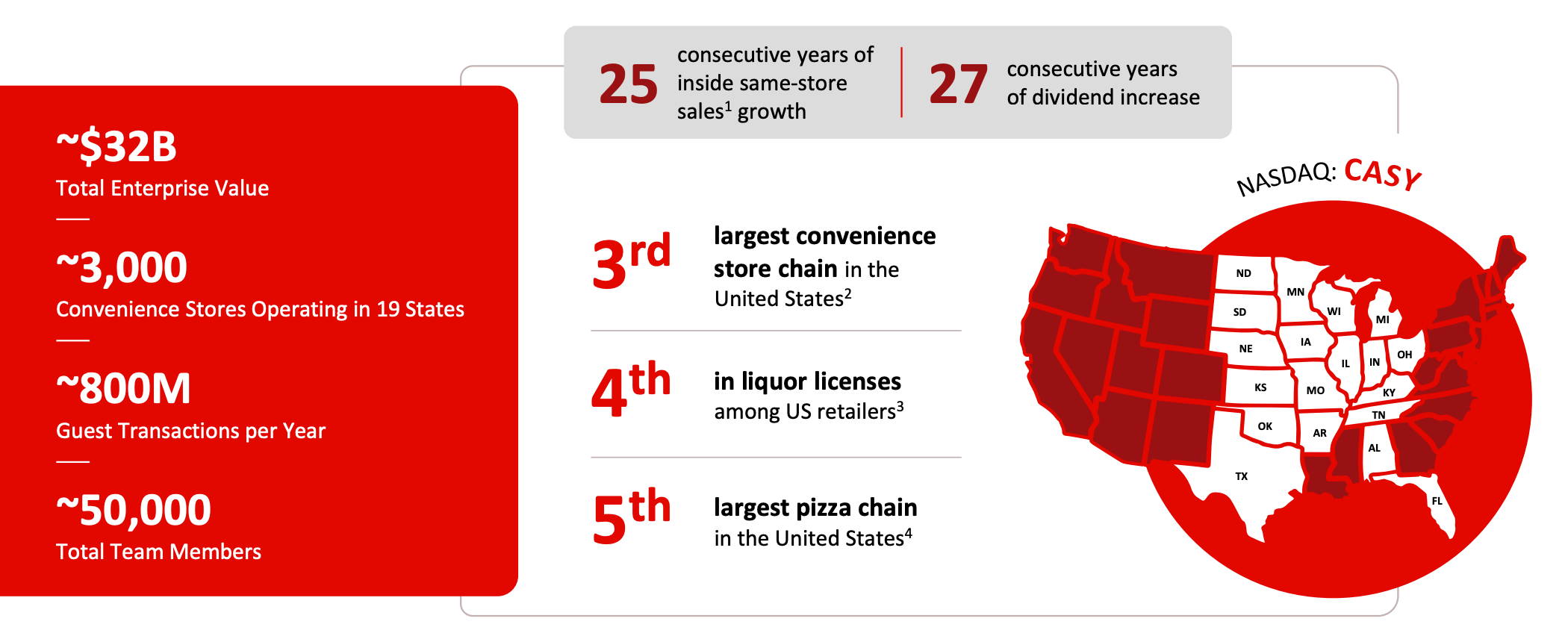
With the war in Iran, gas and diesel prices have gone up and CASY 0.00%↑ is benefitting from the increased fuel margins. However, that has led to concern among some about the sustainability of said higher fuel margins. Same store sales have also dropped YoY, which is another point of concern among investors.
My thesis on CASY 0.00%↑ is pretty simple:
Investor fears are overblown and led to a dramatic selloff which removed any “excess“ in valuation. A margin of safety is now getting built into the stock with price targets in the $700-$800 range and with a forward PE around 27.
Worries over same-store and fuel sales will reverse as the company grows it’s store count, realizes operational efficiencies, and expands both inside-store sales and gross margins through its new 3-year plan.
Looking at the Numbers
CASY 0.00%↑ reports in 4 different segments including Prepared Food and Dispensed Beverages, Grocery and General Merchandise, Fuel, and Other Services (car wash, lottery, ATM fees, etc.). The main revenue segment in terms of revenue is fuel right now especially with the elevated prices that consumers are paying at that pump.
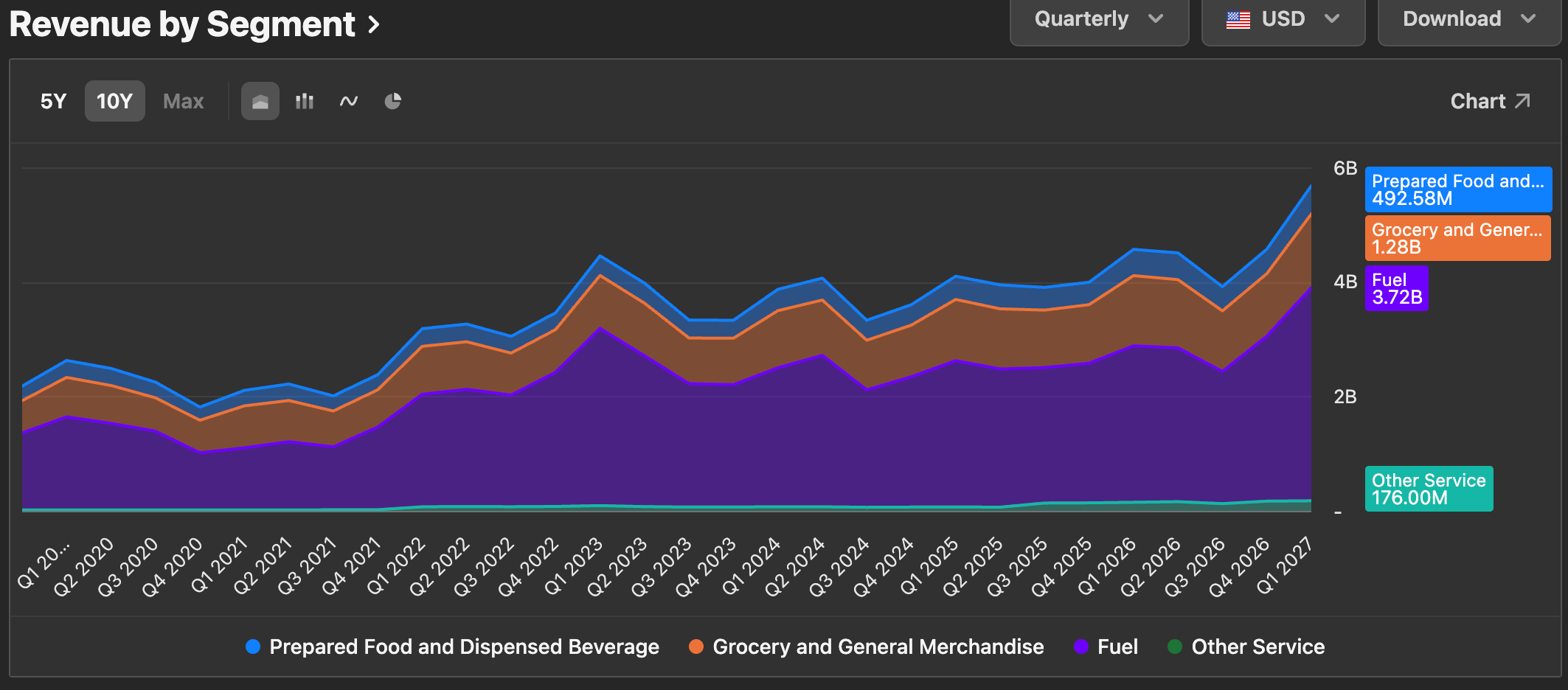
There is some trepidation among investors and prospective investors about a decline in the fuel margins as oil and gas prices mitigate. In my opinion, these fears are overblown as customers will always need gas and lower prices just means more driving and more filling up.
So there will be supply and demand factors at work to offset any weakness in gas prices.
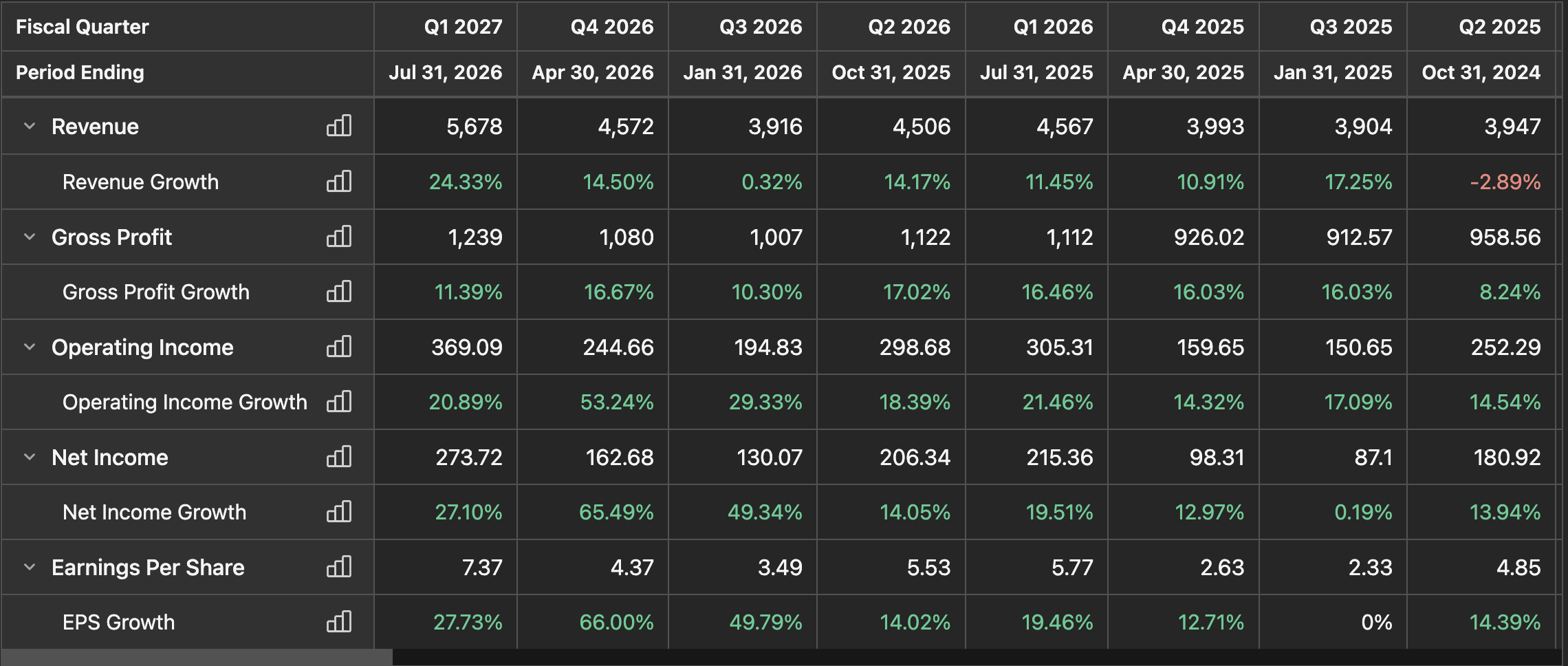
Quarterly data shows that revenue growth is strong at 24.33% for Q1 2027. Gross profit, operating income, net income and EPS showed declines which I attribute to them fully digesting and branding store acquisitions while aligning with their new 3-year strategic metrics.
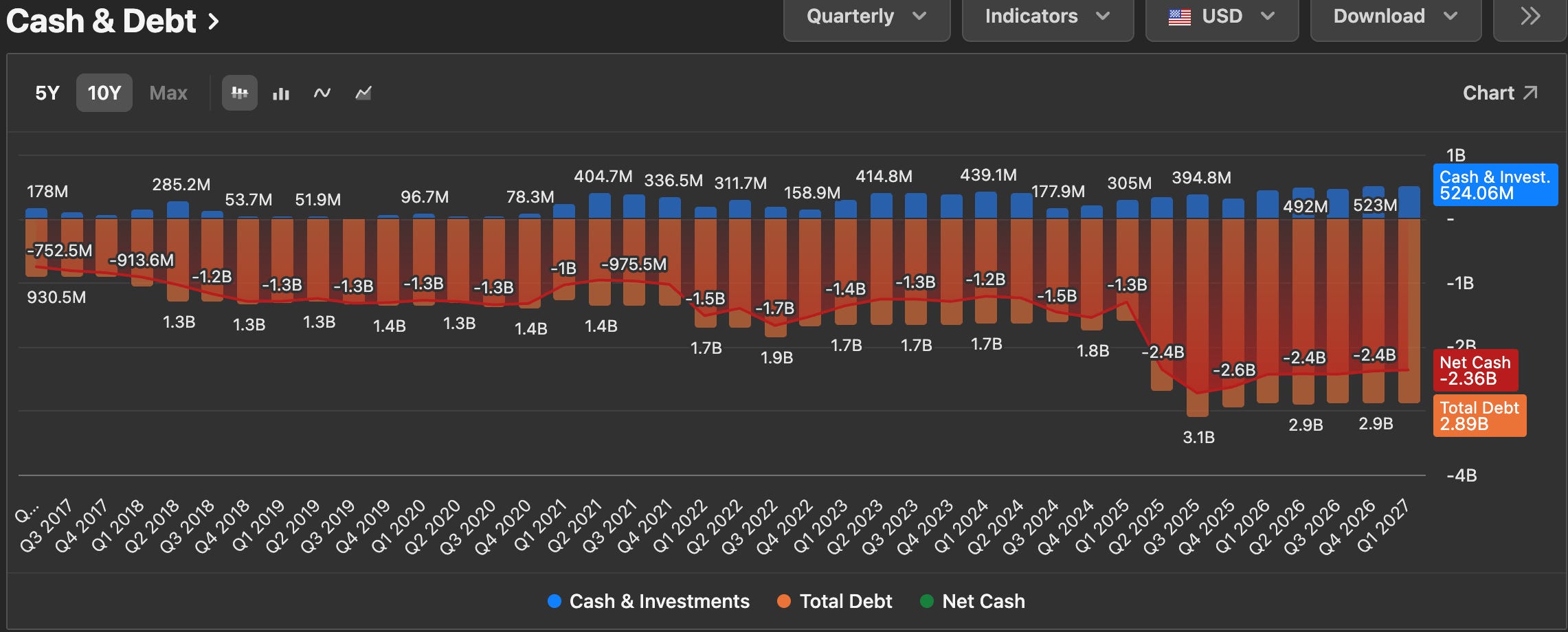
With a -$2.4B net cash position, the debt front leaves something to be desired. Reducing the debt from M&A is ideal, but the majority of debt matures in FY 2030 and the average rate is around 4.3%, so not an immediate concern for the company.
With a ramp in revenues and earnings over the coming years, management should be able to tackle this level of debt. Additionally, their target debt to EBITDA ratio is < ~2.0x and they are sitting at 1.5x. Available liquidity sits around $1.4B, so they have plenty of flexibility when it comes to the business.
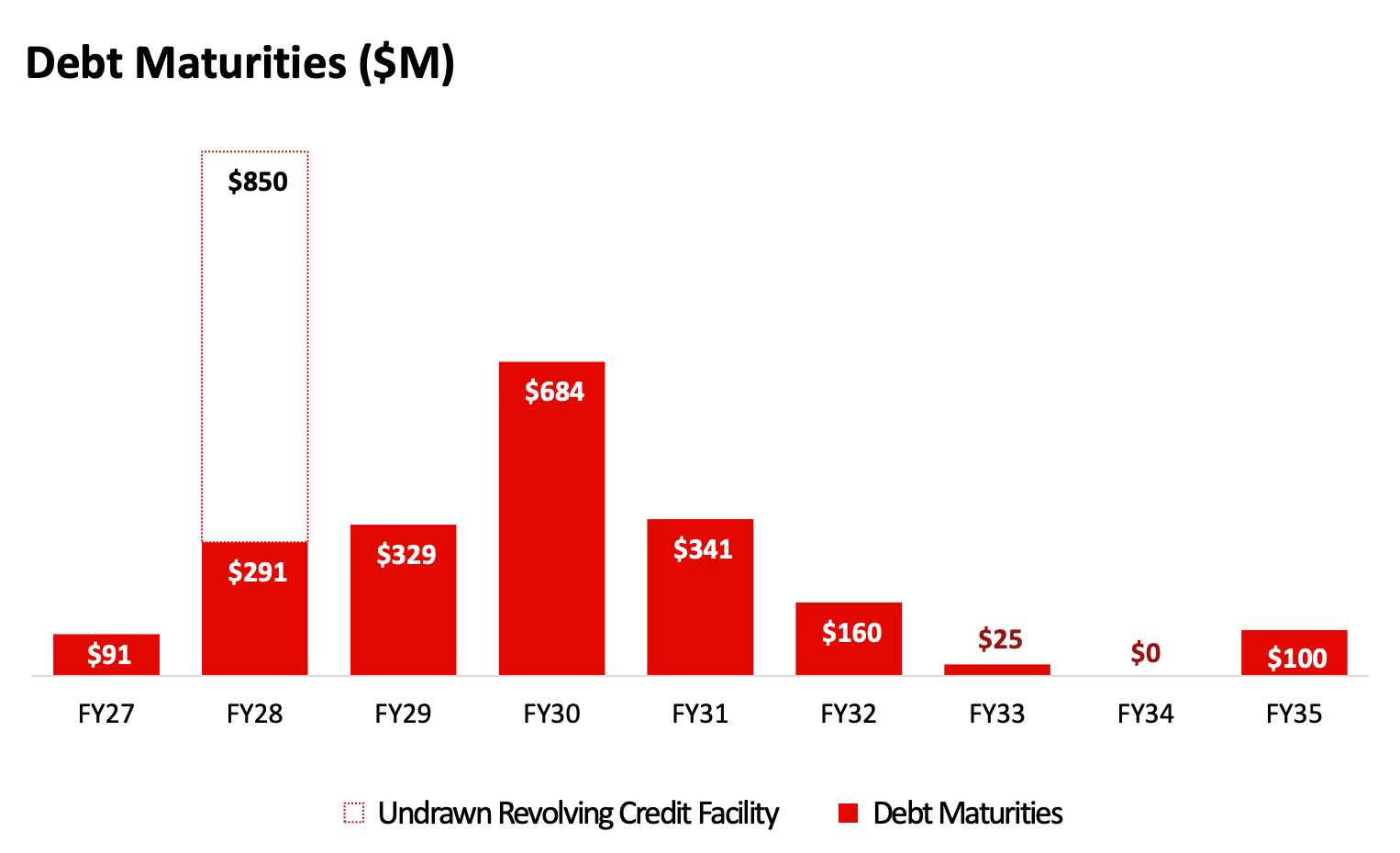
They will focus on debt repayments when the debt to EBITDA ratio starts exceeding 2.0x.
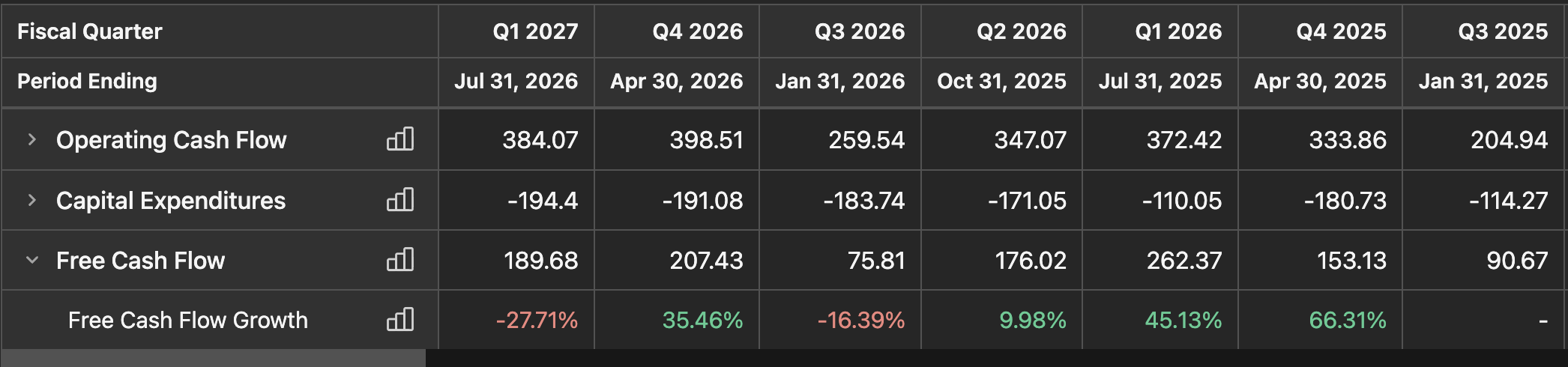
Operating cash flow reached $384.07 million and capital expenditures stayed pretty much inline with last quarter so free cash flow was $189.68 million. This may seem small now but with disciplined management they should be able to grow this in the future.
Operating and profit margins are low but fairly stable. Gross margins were around 21.82% last quarter and have remained above the 20% mark for many quarters now.
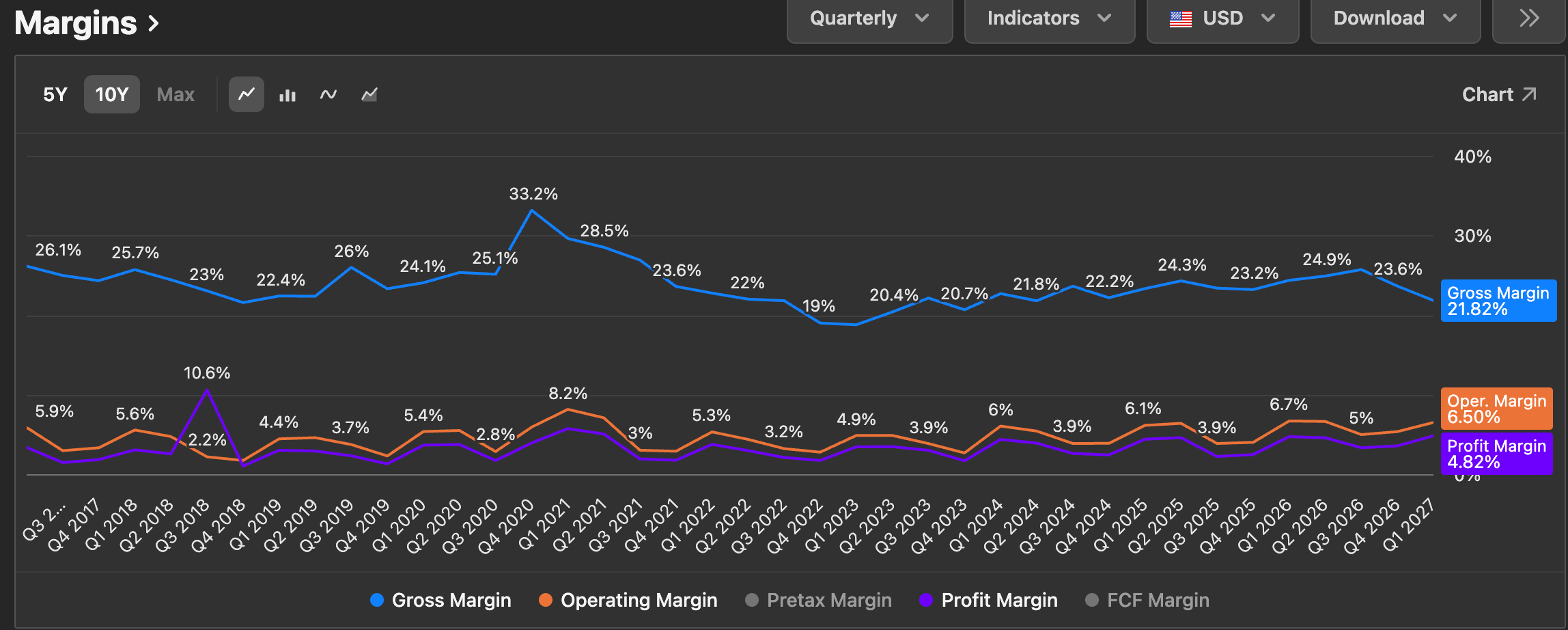
Investors have to watch the operating and profit margins carefully in the upcoming quarters to see how fuel and same store sales are affecting margins. Any disruption in the core business or revenue segments will warrant a re-rating by analysts and my thesis around the business.
3-Year Growth Strategy
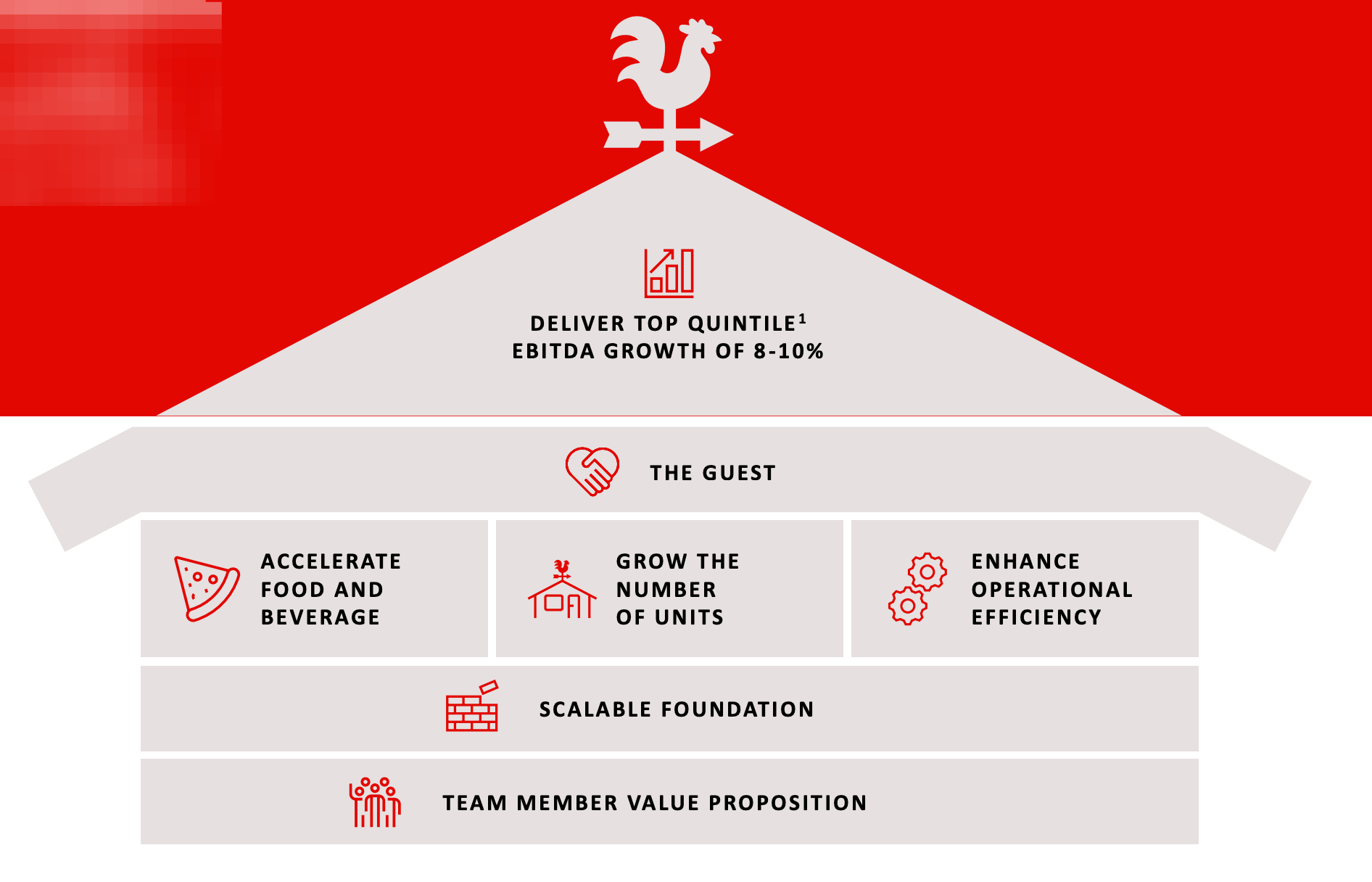
This is the new growth strategy presented by management in their investor day presentation. At the top, they list their goal of EBITDA growth of 8-10% supported by everything below the roof if you will.
Management was keen to point out that CASY 0.00%↑ is part of a select few businesses in this industry that have been able to have an EBITDA CAGR of 8% or greater for the past 10 years.
Their previous 3-year EBITDA CAGR was 16% versus the target of 10%. The main way to keep the EBITDA CAGR up is unit store growth, which will require a balance of M&A and new store builds.
Looking at customer demographics, CASY 0.00%↑ has done a lot of research on their customers. Their rewards membership model is offering a better customer experience than peers. They have noted that 70% of Casey’s Rewards guests make > $50k per year and many of those guests spend more than guests that are not part of their reward program.
In addition, CASY 0.00%↑ is driving incremental traffic by introducing new market launch products. They are estimating 17 exclusive and lead market launch items in FY 27. The customer digital flywheel they are introducing is noteworthy as it can streamline customer interactions and produce meaningful synergy with their rewards program.
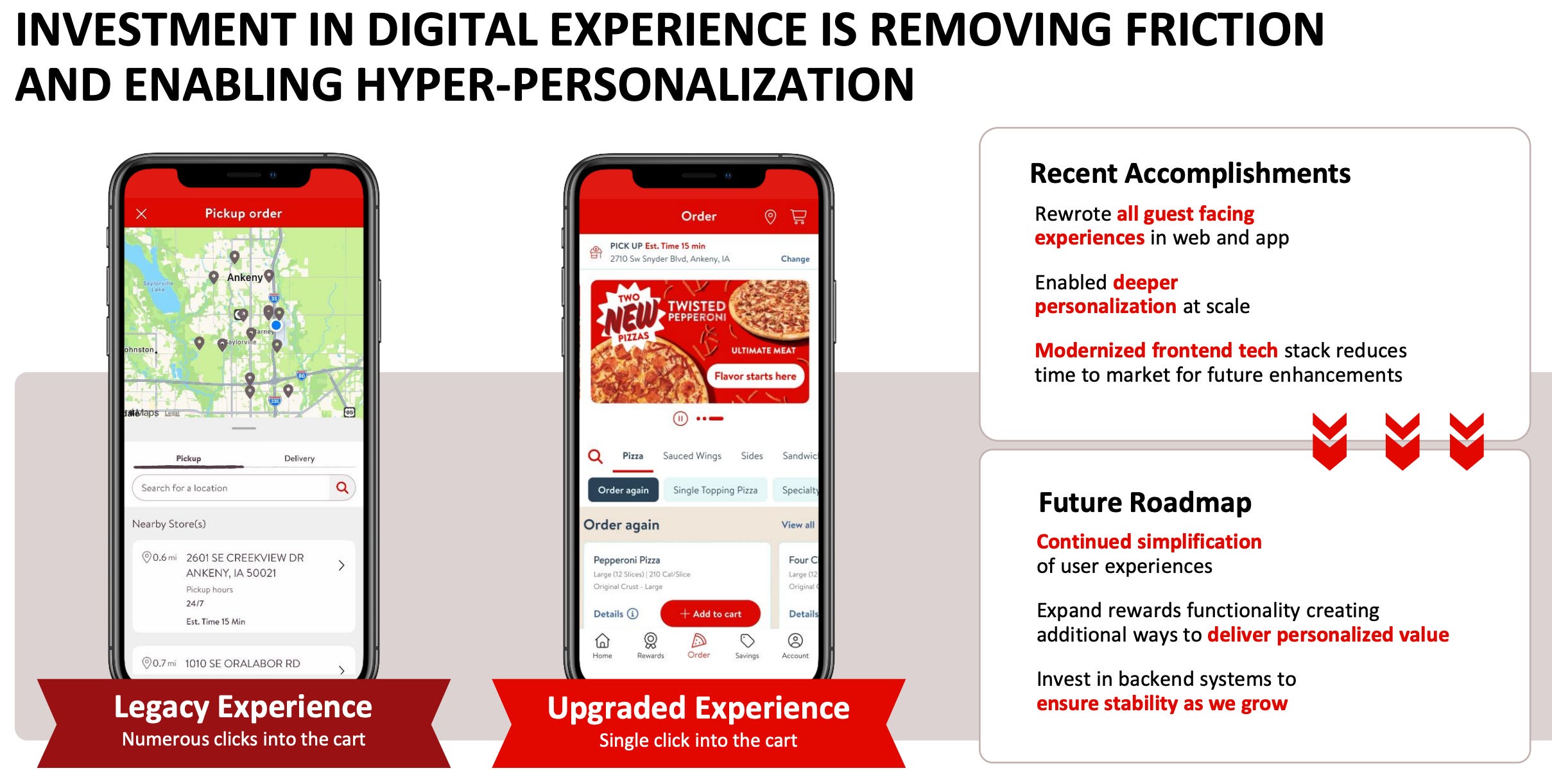
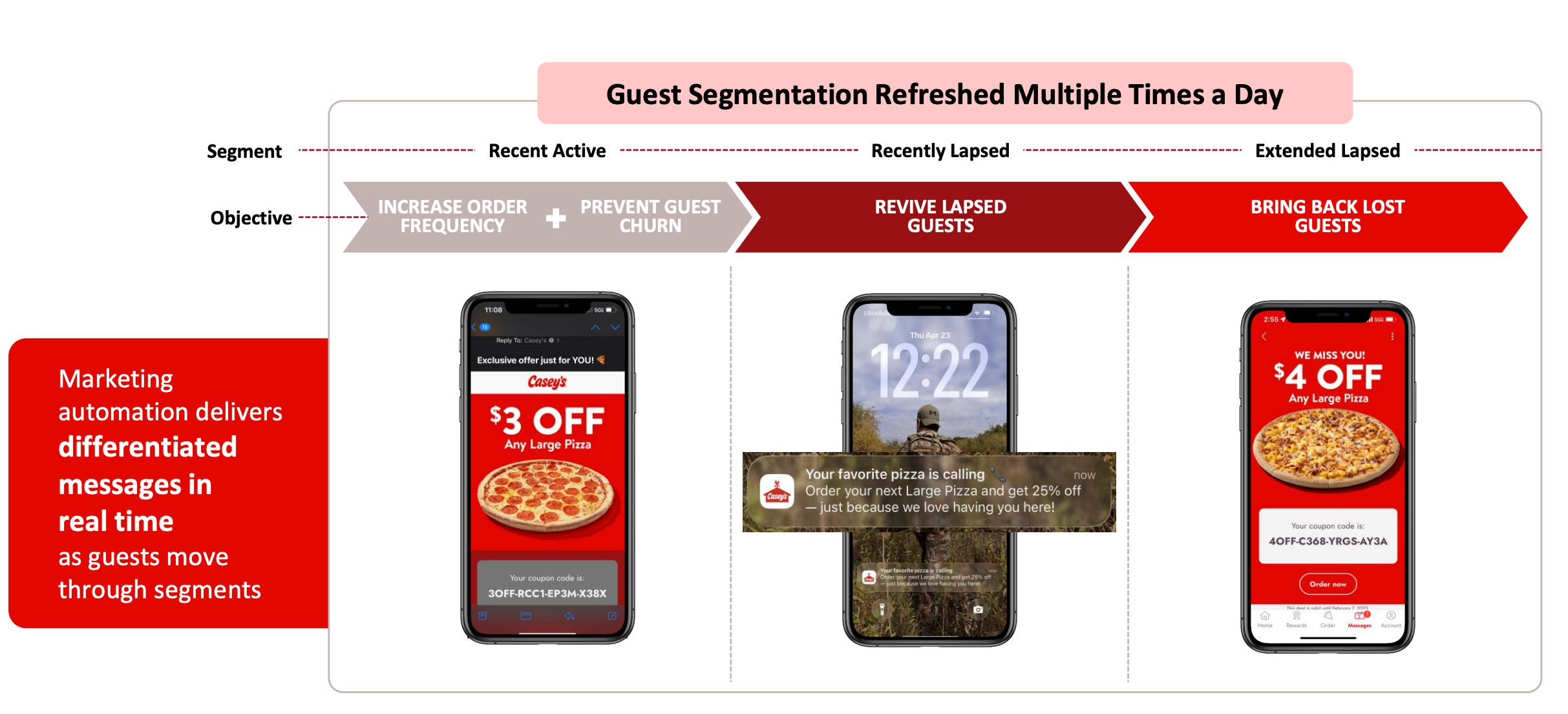
One of the biggest drivers of growth is the prepared foods segment inside their stores. Their pizzas are a big attraction in these rural towns and areas with game-days producing much higher volume of sales than regular days. It’s going to be interesting to track digital sale growth in this omni-channel approach (Doordash, mobile app, other digital channels) as they keep improving digital experiences.
Wings seem to be the next major prepared food platform to grow as they are a high opportunity / low competition opportunity with ~50% of Casey stores not having a wing chain competitor within 5 miles. Plenty of customers also add wings to their pizza orders which results in larger basket sizes and greater revenue.
There is significant white space in their footprint to support future unit growth, as up to 75% of rural towns in their target distribution area still do not have a Casey’s. They have a case study that suggests that fuel gallons and inside store sales are higher in remodeled stores
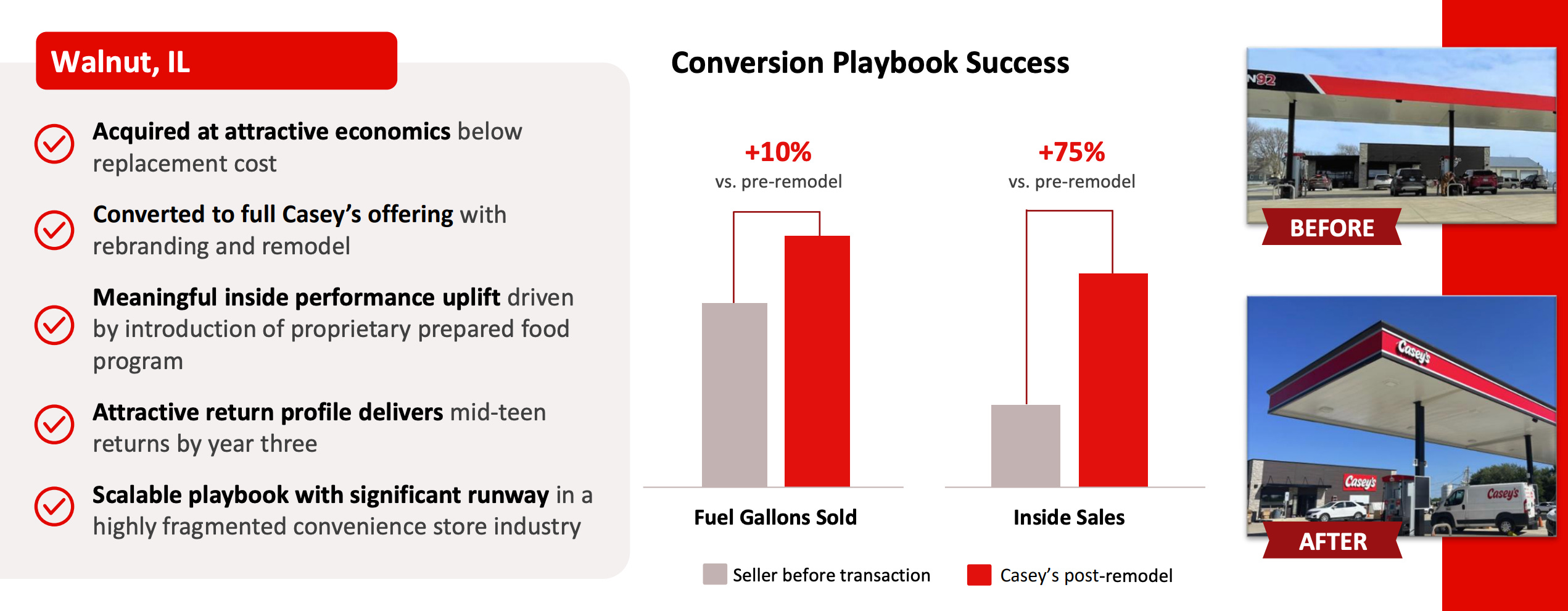
In addition, it seems that new builds have significantly better fuel gallon, inside store and EBITDA than existing store locations. Thus it is clear that to increase operational efficiency across the board, management will have to focus on remodeling existing stores, new builds in appropriate locations and streamline operations at all stores whether new build or not.
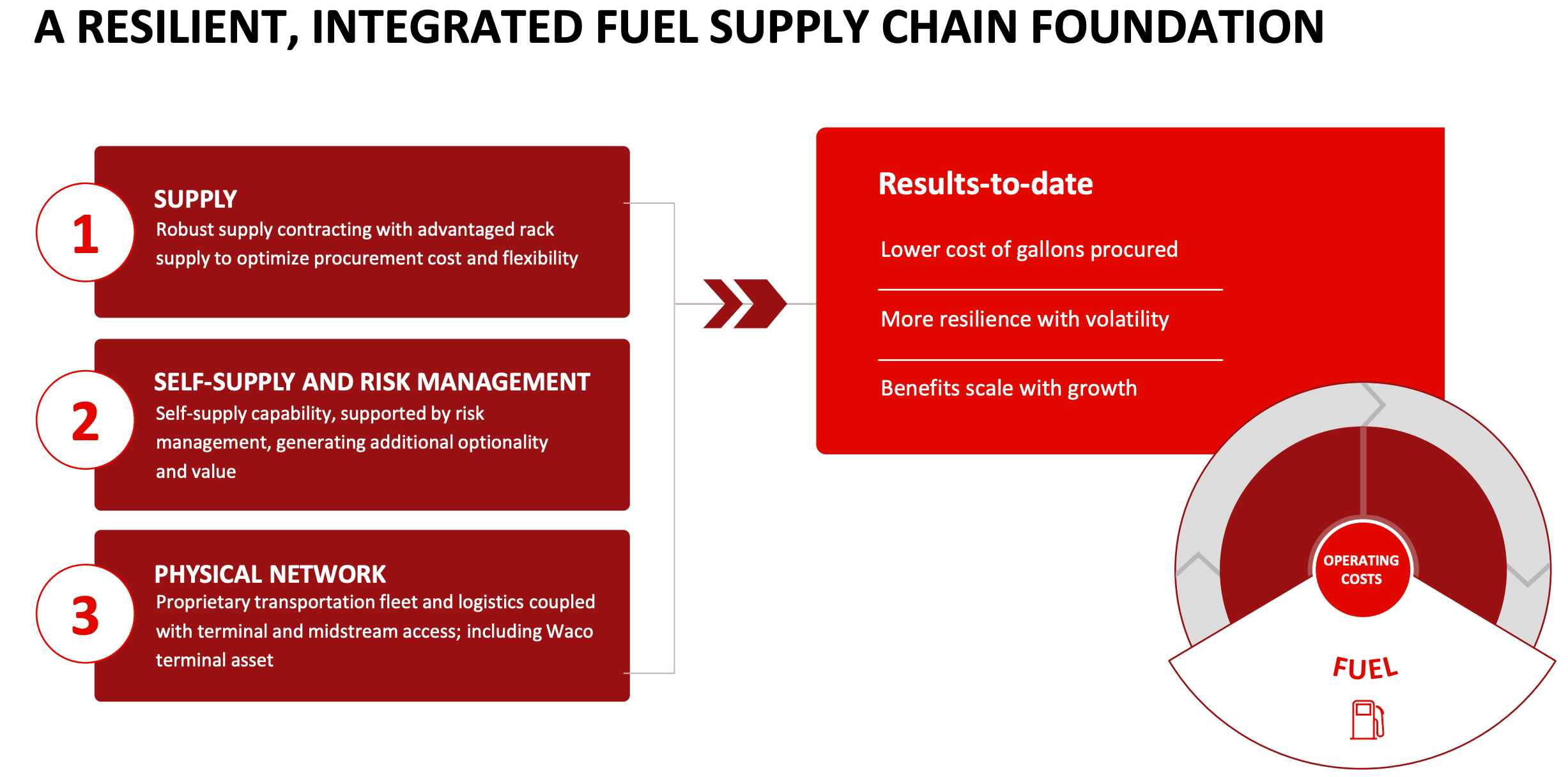
They will increase the scale of their fuel supply and distribution in stores in the future so that the margins are supported.
Risks and Headwinds
A temporary issue I see with this 3-year model is the costs associated with remodeling all the stores they acquire through M&A. That will drive down the margins from these stores for a bit, but will be a driver of further EBITDA expansion later on.
The Iran war will not last forever, and when it does wind down, the fuel premium should drop and customers will pay less at the pump. I’m not too concerned with this as I think fuel will always be needed, especially in rural towns and areas, to get to convenient locations. You need to drive to get things and services in rural areas as opposed to cities where things are more walkable.
Moreover, if they realize fuel efficiencies and keep their fuel margins higher, then they might be able to stave off a portion of the hit when the war premium does fall off.
A final concern is a general economic downturn driven by lingering inflation. The Fed is already raising rates, but because monetary policy acts on a lag, the economic impact of today's hikes won't fully materialize for 6-12 months. We will have to monitor whether these increases effectively dampen inflation without crushing consumer demand.
Analyst Estimates & Valuation
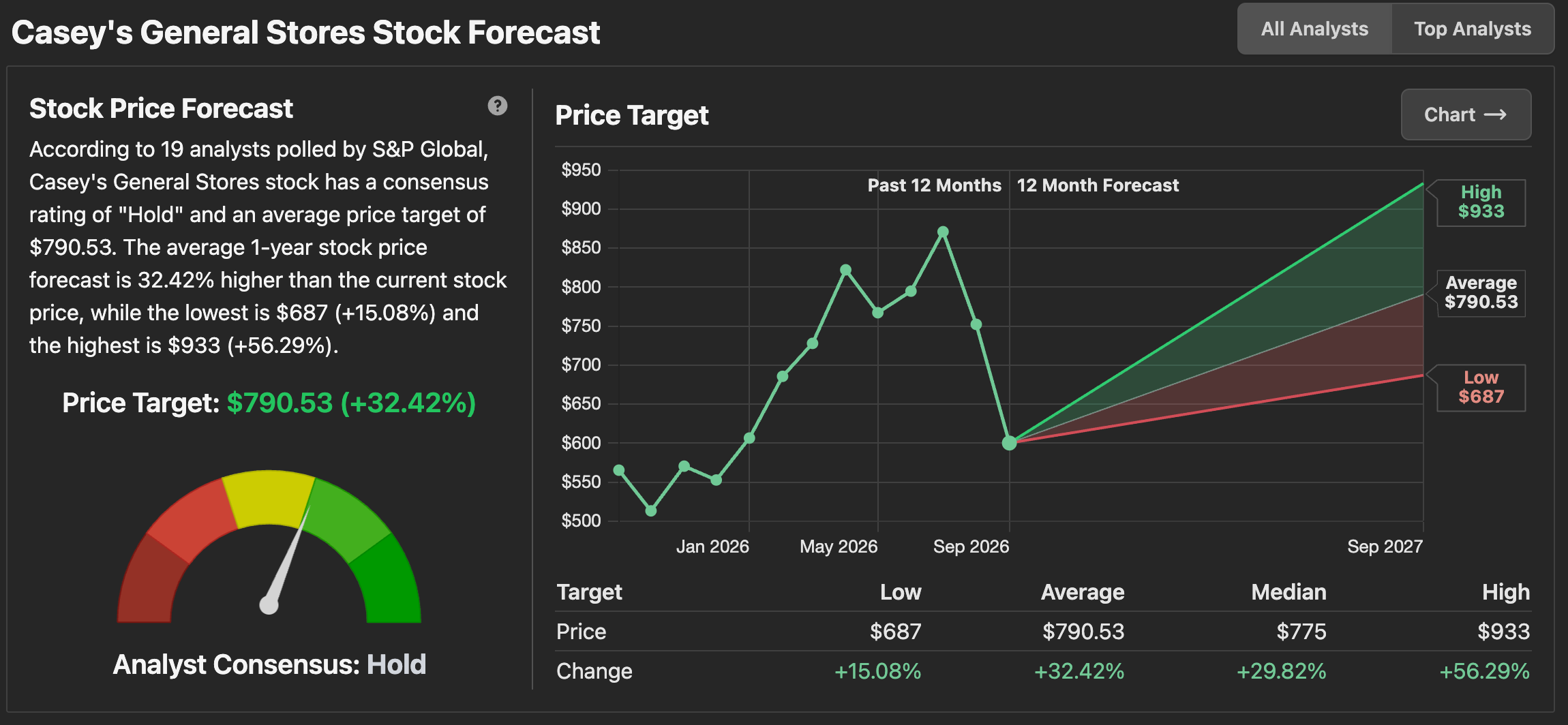
Moving to analyst forecasts on CASY 0.00%↑, the average analyst consensus is a Hold but the price target is notably 32.42% higher than the current price at $790.53 per share. Some analysts have estimates that are over $900 and some as low as $687. But even the lowest estimate is higher than the current price giving some margin of safety in the name.
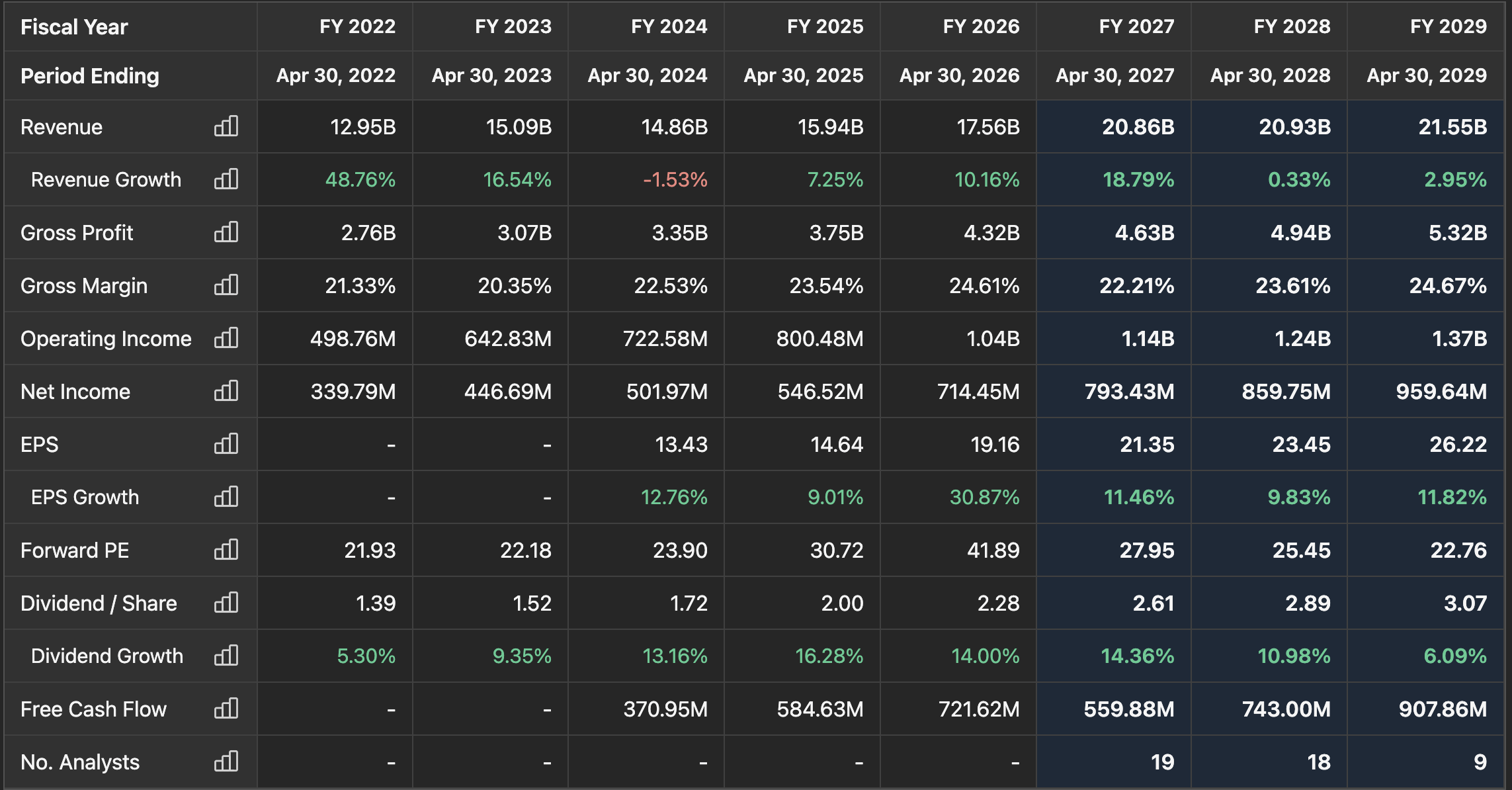
Projections for future years look good for FY 2027 but less so for FY 2028 and FY 2029. Analysts are anticipating 18.79% revenue growth and 11.46% EPS growth for FY 27. Free cash flow does look good for the next few years which might be the most important metric for a prospective shareholder.
In terms of capital allocation, CASY 0.00%↑ has been increasing their dividends pretty regularly and also buy back their shares.
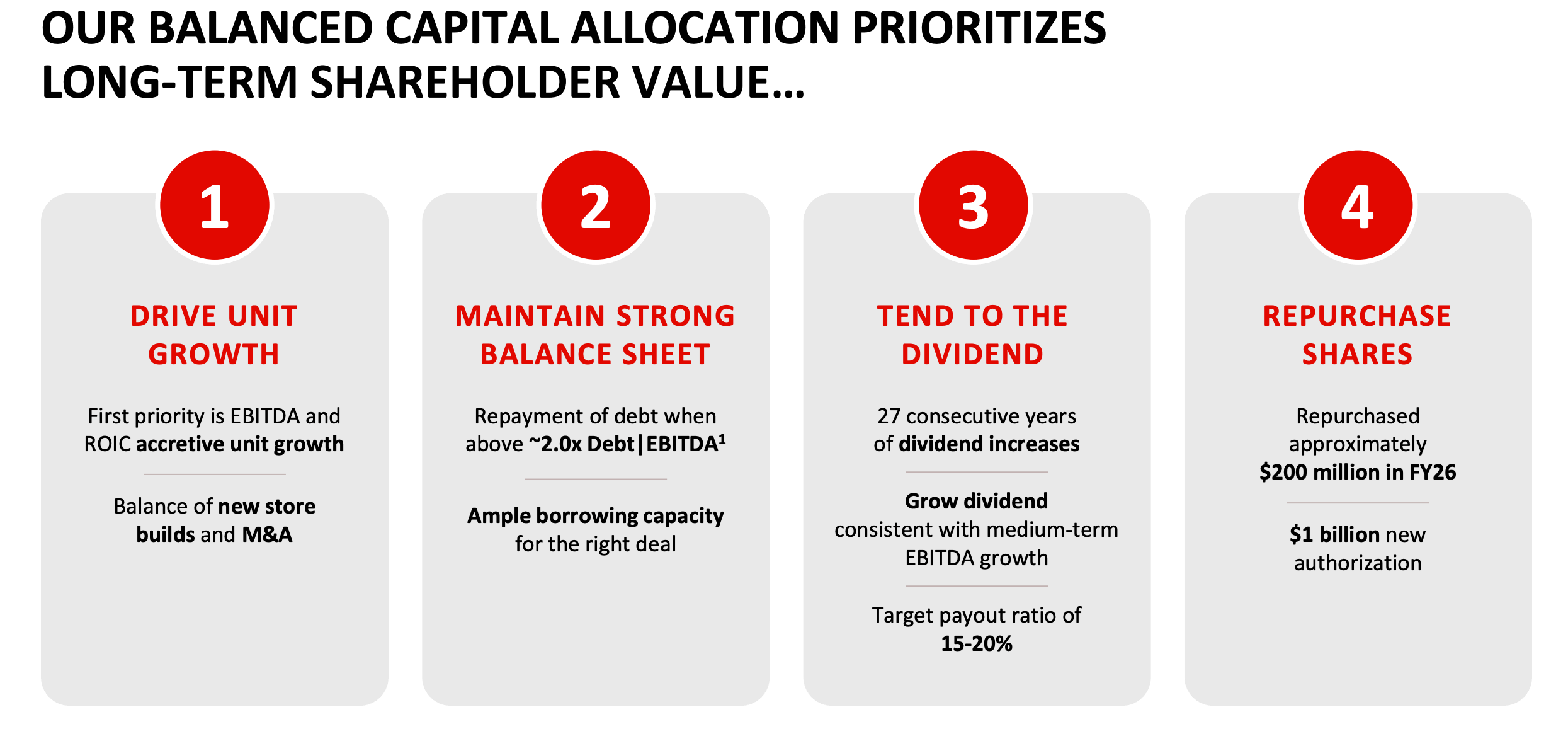
My ardent wish is that management sees a discrepancy between fair value and stock price after the earnings as a way to increase value for shareholders by using some of the new $1B share buyback authorization.
As noted in the beginning, I wrote a put on this stock after the large drop post earnings. The risk-reward profile in such a position is high; if I’m assigned shares, I can hold the position or sell covered calls at a higher strike price. If I’m not assigned, I will collect the premium anyways.
As always, my content is not financial advice and you should always do your own due diligence when investing your money.